

September 3, 2026
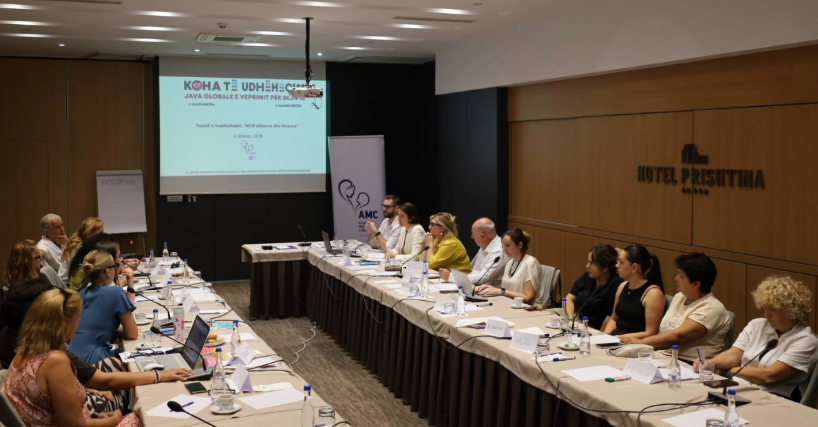
Action for Mothers and Children (AMC) brought together patients and representatives of organizations working in the field of noncommunicable diseases (NCDs) for a roundtable discussion focused on strengthening patient voices and their role in advocacy and shared decision-making on health policies in Kosovo.
AMC Executive Director Rina Demiri Spahija emphasized the importance of the direct and independent inclusion of patient voices, so that people living with NCDs are included as active and equal partners in the processes that affect their health and care.
Participants from organizations representing people living with diabetes, hypertension, cancer, lung diseases and other chronic diseases, shared challenges they face in their daily lives. They emphasized that patient empowerment should also be reflected in their inclusion in the development of national policies and programs for the prevention and management of noncommunicable diseases.
One of the priorities identified during the roundtable was the creation of a joint advocacy mechanism to strengthen Kosovo’s response to NCDs. The mechanism could bring civil society organizations together to coordinate their efforts, strengthen their collective voice and advance national action on NCD prevention, treatment and management.
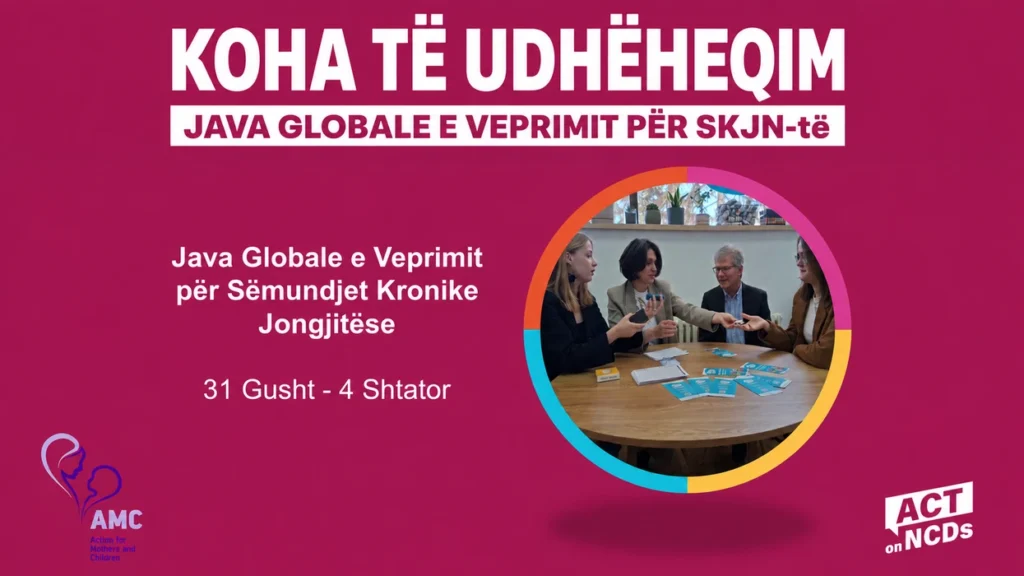
The event was organized as part of the 2026 Global Week for Action on NCDs, a global campaign that this year places particular emphasis on leadership and the need to turn commitments into concrete action, investment, accountability and measurable progress.
The campaign highlights the importance of leadership at every level — from government institutions to communities and people with lived experience of these diseases — in addressing NCDs, which are the leading cause of death and disability worldwide.
In Kosovo, the need for stronger action is becoming increasingly urgent. According to the National Institute of Public Health of Kosovo (NIPHK), 43,539 cases of noncommunicable diseases were reported in 2024, compared with 41,258 cases in 2023, an increase of 5.5%.
Hypertension and diabetes are among the most frequently reported NCD diagnoses, while chronic respiratory diseases and cancer also account for a significant share of the country’s NCD burden.
Reducing the burden of these diseases requires stronger prevention and earlier detection, access to quality healthcare, and the empowerment of patients through their meaningful participation in decisions affecting their health and care.
AMC’s activities are carried out within the framework of the “Non-Communicable Diseases (NCD) Patient Engagement Accelerator” initiative, supported by the Integrated Health Services (IHS) project.